
You can promote ProDentim on Google Ads. But it's one of ClickBank's most competitive offers, it pays little per click, and it bans its brand name in ads. So only affiliates with four pieces maxed out make sales.
- High competition: eight times in ClickBank's top 5 since March 2025.
- Thin margin: ProDentim paid $0.35 to $1.53 per click, not the $3 claimed.
- Brand terms banned: no “ProDentim” in keywords or ad copy.
- The answer: campaign, presell, Google tag and tracking, all maxed out.
ProDentim is one of ClickBank's most competitive offers
Plenty of affiliates chase the same buyer. The weakest setup pays the most per click. The signs:
- It made ClickBank's monthly ranking eight times between March 2025 and September 2026.
- It's also listed on several CPA networks.
- Google results for its name are packed with affiliate pages.
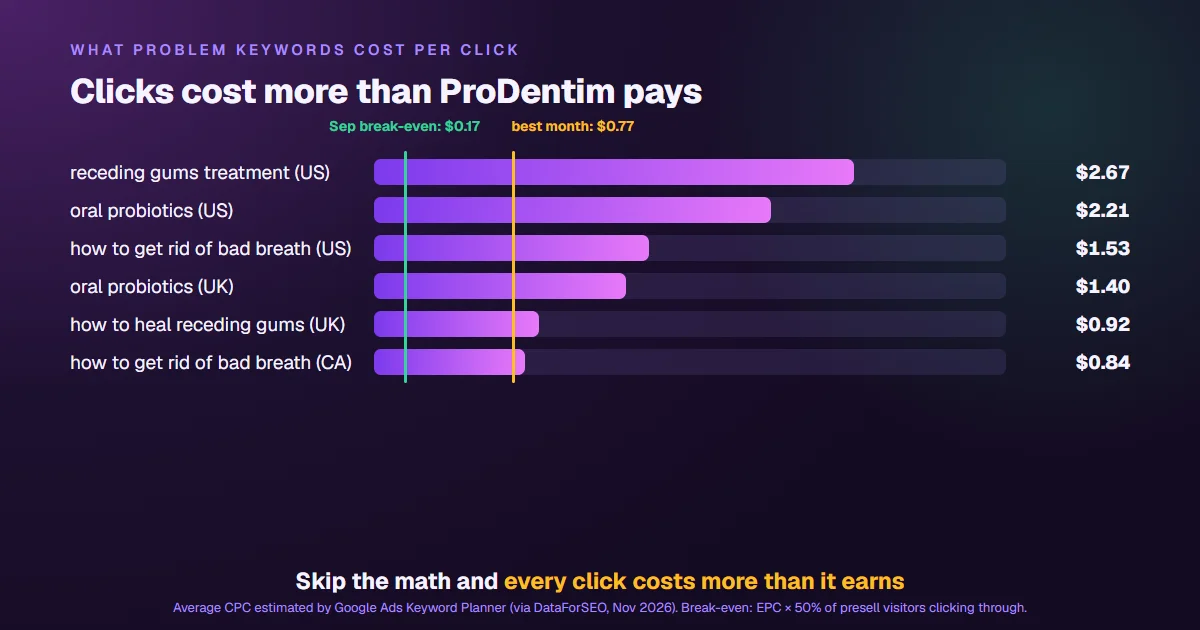
- Problem keywords are expensive: in the US, “receding gums treatment” runs over $2.60 per click.
High competition alone would just mean more work. The real problem is the thin margin.
The margin per click is thin
The affiliate page talks about $3 per click. In ClickBank's rankings, ProDentim paid between $0.35 and $1.53.
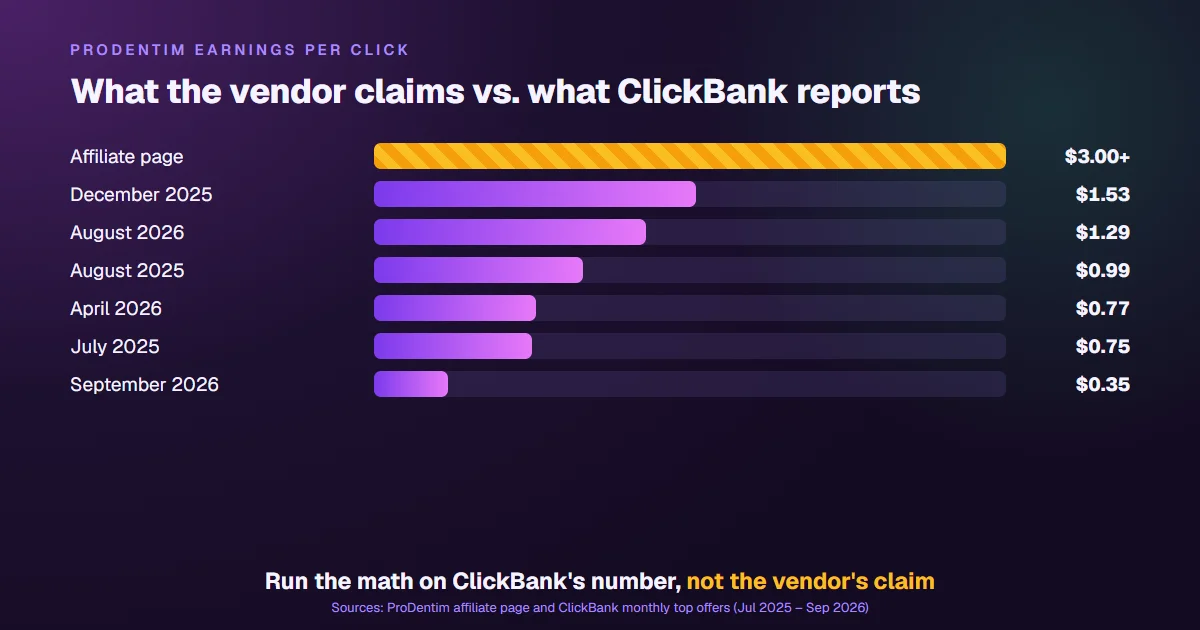
EPC (earnings per click) is what ClickBank paid, on average, per visitor sent to the sales page. A $0.35 EPC = $35 for every 100 visitors.
With expensive clicks and a thin margin, every cent decides whether the campaign is profitable. So can you still sell it? Yes. But first you need to know what the vendor won't let you do.
How to join the ProDentim affiliate program (and what's banned)
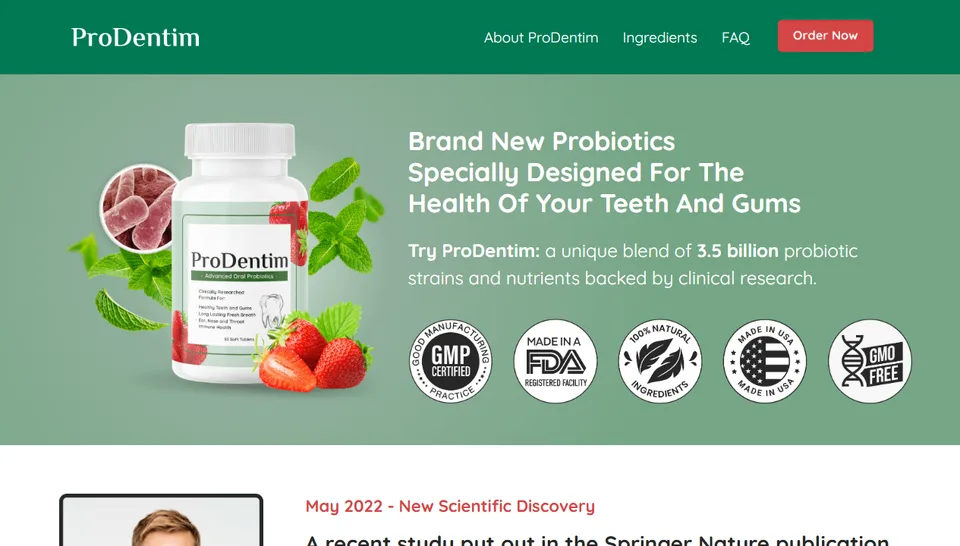
ProDentim is a chewable probiotic for teeth, gums and breath, sold on ClickBank. In September 2026, the average payout was $178.44 per sale.
- 1Open a ClickBank affiliate account (step by step).
- 2Apply on the ProDentim affiliate page with your ClickBank ID and traffic sources.
- 3Generate your HopLink and pick the landing page (video or text).
- 4Read the traffic rules before you build the campaign.
What the vendor bans
Break the rules and you lose your commissions.
- Bidding on “ProDentim” keywords on Google Ads.
- Using the name “ProDentim” in paid ad copy.
- Using “scam” or “fraud” wording in ads or landing pages.
Without the brand, you're left competing for buyers on the problem they have, right where every other affiliate is. This is where your setup decides who sells.
The 4 pieces you need maxed out
The product is the same for every affiliate. What changes is the setup around it. And the first piece decides how much you pay for every click.
1. Campaigns at peak performance
A high Quality Score pays less for the same click. To get there:
- Keywords for the problem ProDentim solves.
- Negatives that cut people who won't buy.
- Headlines and descriptions written for Quality Score.
AdsCreator builds the campaign with AI from the product, with all of this ready. But a great ad sending people to a slow page throws the click away.
2. A presell at top speed
A slow presell raises your CPC and loses visitors.
- Page speed feeds into Quality Score.
- Slow pages lose visitors before they load, especially on mobile.
- For supplements, the presell can't promise a cure or guaranteed results.
AdsPages builds the presell as lightweight HTML, no WordPress, and AdsHosting publishes it on your domain. Recommended template: review presell. The page loaded and the visitor clicked through. But do you know what they did next?
3. The Google tag on your presell
Without the tag, your campaign goes blind halfway through. With it, Google Ads follows the visitor on your page and ties the conversion to the click.
In AdsX, you add the Google tag to your presell from the dashboard, no code. It shows the path to the vendor's page. But the sale happens somewhere you can't install anything.
4. Sales tracking switched on
Your first sale teaches Google to find the next one. Without tracking, Google doesn't know who bought.
- The sale happens on ClickBank's checkout, outside your presell.
- AdsTracking receives ClickBank's postback and sends every sale to Google Ads.
- Each following sale tends to cost less, and the campaign scales.
Setup in ClickBank tracking pixel for Google Ads.
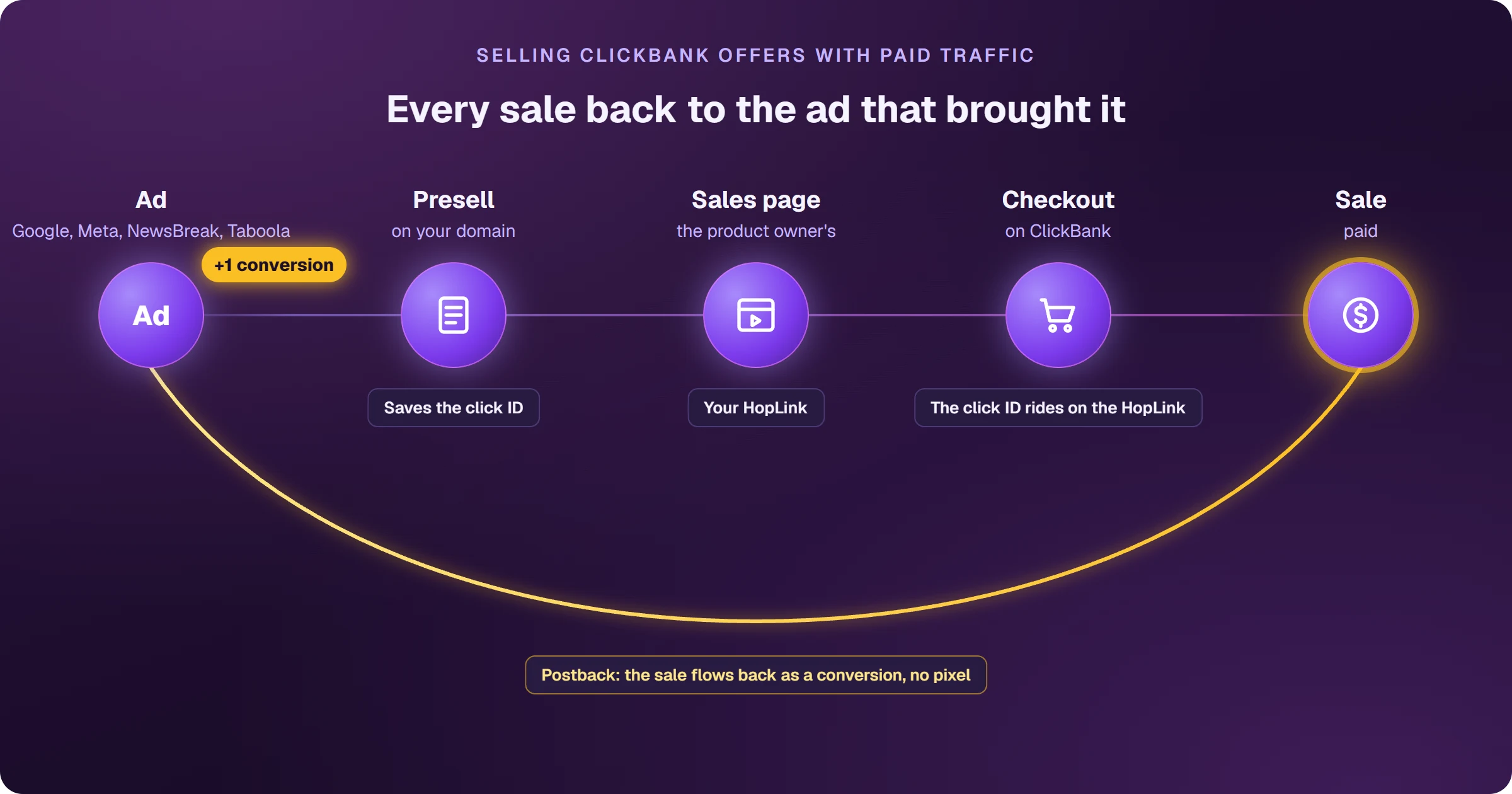
ProDentim made ClickBank's top 5 eight times in a year and a half. The demand is there: affiliates with a maxed-out setup are the ones who sell.
With all four pieces in place, the question changes: when do you raise the budget?
When to raise your budget
Only after your first sales reach Google. Scale comes in this order:
- 1The campaign brings the click at the lowest cost.
- 2The fast presell holds the visitor and sends them to ProDentim.
- 3The Google tag follows the journey.
- 4Tracking hands every sale to the algorithm, and cost per sale drops.
- 5Only then raise the budget. Before that, more spend means bigger losses.
To compare ProDentim with other offers, see our top ClickBank products for Google Ads ranking.
Frequently Asked Questions
Can I use the ProDentim name in my Google ads?
No. The vendor bans the name in keywords and ad copy. Target problem keywords, like bad breath and receding gums.
How much does ProDentim pay per click?
It depends on the month: from $0.35 (September 2026) to $1.53 (December 2025), according to ClickBank. The average payout is about $178 per sale.
Why does presell speed matter so much?
Because it feeds into Quality Score, which sets your CPC. And because a slow page loses visitors before it loads.
Do I need approval to get the ProDentim HopLink?
Yes. You submit your ClickBank ID and traffic sources on the affiliate page, and the HopLink is released once you're approved.
Max out all four pieces with AdsX
AI-built campaigns, a fast presell on your own domain, the Google tag added from the dashboard and every ClickBank sale sent to Google Ads. All in one toolkit.